
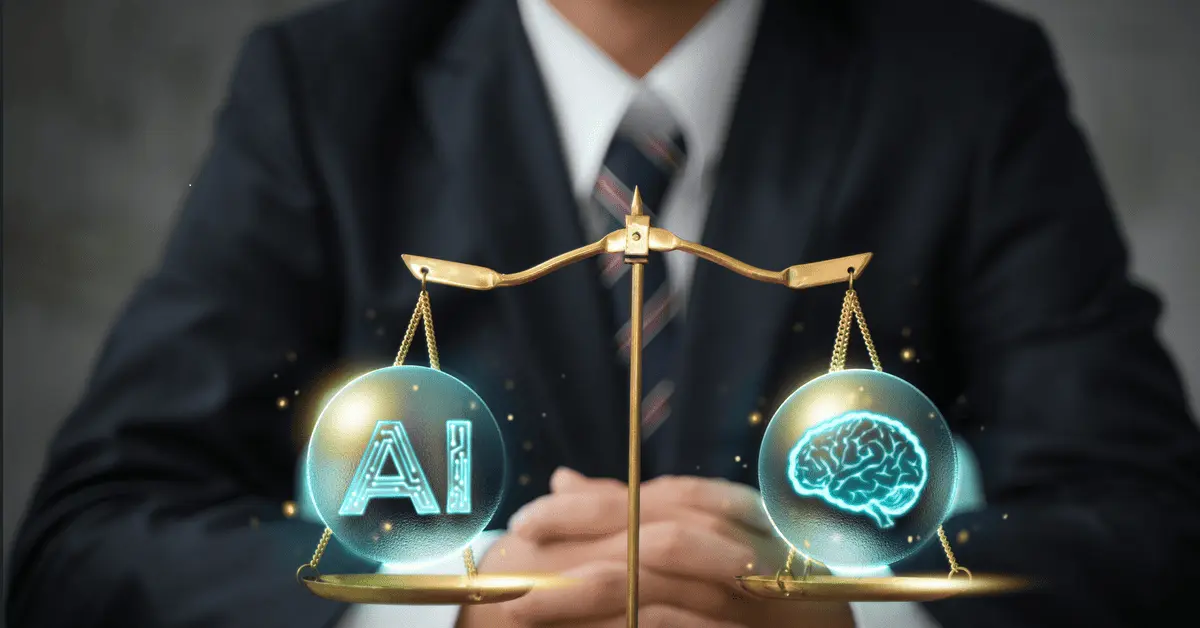
| Key Takeaway: AI-generated Content Ownership The rise of AI-generated content has triggered a global legal debate. Who owns the rights: the human behind the machine, the AI system itself, or no one at all? India is now facing its first AI copyright showdown, making it a crucial moment to rethink copyright frameworks. The balance between innovation and intellectual property protection will define the future of creativity, commerce, and law in the digital era. The Delhi High Court’s ongoing case (ANI v. OpenAI (2024)) is the first major judicial scrutiny of generative AI in India. While no final judgment has been delivered, the case may shape how courts view liability for AI training and authorship |
From writing poems to designing logos, Artificial Intelligence (AI) is no longer just a tool; it is an active participant in the creative process. This raises a pressing question: when AI generates content, who owns it?
Globally, courts, lawmakers, and businesses are struggling to align AI and copyright law. While the United States Copyright Office (USCO) has made it clear that AI cannot be considered an author, other jurisdictions are exploring hybrid models that recognize human–AI collaboration. In India, the issue has moved from theory to reality with its first AI copyright dispute: a potential landmark case that could redefine how intellectual property (IP) rights work in the age of machine intelligence.
This blog explores the AI copyright crunch, looking at global approaches, India’s evolving stance, and the wider implications for intellectual property and AI.
The AI and Copyright Law Debate: Why It Matters
AI has blurred the line between human authorship and machine assistance. Traditional copyright law for AI rests on a fundamental principle: original works of authorship must stem from human creativity. But what happens when a neural network writes an entire novel or produces music indistinguishable from that of a human composer?
The legal challenges include:
- AI Content Ownership Debate: Can AI itself be recognized as an author, or should ownership rest with the programmer, the user, or no one?
- Copyright Infringement by AI: AI models are often trained on vast datasets that include copyrighted works. Does using such data amount to infringement?
- Machine-Generated Content Copyright: Should outputs of machine learning systems be placed in the public domain or protected under adapted copyright frameworks?
The answers are far from settled, and the implications affect everyone—from artists and software developers to businesses and policymakers.
Does India’s Copyright Law Allow Non-Human Authorship?
Under the current legal framework, India’s Copyright Act, 1957 does not allow non-human authorship, making it clear that only natural persons can be considered authors of copyrighted works. Section 2(d) expressly identifies the author as a human, whether in the case of literary, musical, artistic, or cinematic creations. Since AI lacks legal personality and cannot hold rights or responsibilities, it cannot independently claim authorship or ownership over the content it generates. This position aligns India with jurisdictions such as the United States, where copyright protection hinges on human creativity and original expression. The Indian legal system, therefore, requires evidence of human intellectual effort and creativity to justify copyright protection, leaving purely machine-generated content outside the scope of enforceable copyright unless future legislative amendments reconsider this limitation.
Can AI-Generated Works Be Protected Through Human Mediation?
Even though purely autonomous AI outputs cannot currently be copyrighted in India, works that are substantially shaped, edited, or curated through meaningful human involvement may qualify for protection. This approach considers whether a human has exercised creative judgment in the conception, direction, or modification of the AI’s output, transforming the work into a human–AI collaborative creation rather than a strictly machine-generated one. In such cases, the human contributor may be recognized as the legal author, similar to the “significant human input” standard being explored globally. This pathway provides a pragmatic compromise, ensuring that innovators and creators retain protection when AI functions as a tool rather than an autonomous creator. It also encourages responsible and transparent AI use while preserving incentives for human creativity within an increasingly automated ecosystem.
Global Perspectives: How Other Countries Are Handling It
- United States: The US Copyright Office requires a “human author.” Recent cases, including the denial of copyright for AI-generated comic images in Zarya of the Dawn1, reinforce this stance. While the comic book itself can be copyrighted if it contains sufficient human-created elements, the individual images generated by AI alone are not eligible for copyright.
- United Kingdom: Interestingly, the UK Copyright, Designs and Patents Act provides that for computer-generated works, the author is “the person by whom the arrangements necessary for the creation of the work are undertaken.” This gives limited recognition to AI outputs but anchors authorship to a human. This legal provision is found in Section 9(3) of the Copyright, Designs and Patents Act 1988 (CDPA) [1]2.
- European Union: EU policymakers are considering a “significant human input” test, allowing copyright where humans meaningfully influence AI-created works. This approach seeks to balance the benefits of AI with copyright’s purpose of incentivizing human creativity, ensuring that purely autonomous AI outputs remain unprotected while works with meaningful human guidance, like detailed prompting or significant post-editing, may be eligible for copyright3.
- China: Chinese courts have been more experimental, granting copyright protection in some AI-assisted cases, particularly where originality and creativity can be traced back to human input. This approach considers AI a tool, and copyright is granted if the human user can demonstrate sufficient intellectual input through actions like refining prompts, making artistic choices, and selecting/modifying the final output4.
India now stands at a crossroads, deciding whether to follow restrictive models like the US, flexible ones like the UK, or create its own path.
Copyright Law in the Age of AI: Emerging Challenges
There are a few points to consider.
Training Data and Fair Use
AI systems are trained on massive datasets, often scraped from the internet without consent. Is this “fair use” for transformative purposes, or a violation of creators’ rights?
Attribution and Moral Rights
Traditional copyright protects not just economic rights but also moral rights, like recognition of authorship. If an AI writes a song, who gets the credit?
Commercial Exploitation
As companies increasingly monetize AI-generated images, videos, and text, unresolved AI copyright issues create uncertainty for investors, creators, and consumers.
Legal Status of AI-Generated Content
Should machine-generated works default to public domain status, allowing unrestricted use, or should a new sui generis right (a separate legal category) be created for AI content?
India’s Legal Reforms for AI Content: The Road Ahead
For India, aligning copyright with AI innovation is not optional; it is necessary for economic and cultural leadership. Potential reforms include:
- Clarifying Human Involvement: Establishing a “significant human input” test, similar to EU proposals, could balance recognition and protection.
- AI-Specific Licensing Regimes: Developing frameworks for AI training data, ensuring creators are compensated when their works are used to train models.
- Public–Private Dialogues: Involving technology firms, artists, legal experts, and policymakers in shaping balanced regulation.
- International Harmonization: Aligning with global standards to ensure Indian creators are not disadvantaged in cross-border markets.
Such reforms would provide certainty, foster trust, and protect India’s role in the global AI-driven creative economy.
Case: ANI v. OpenAI (2024)
1) Overview
In November 2024, Asian News International (ANI) filed a copyright infringement lawsuit against OpenAI in the Delhi High Court, alleging that ChatGPT was trained on ANI’s copyrighted news articles, including paywalled content, without permission. ANI also argued that ChatGPT sometimes reproduces ANI’s reports verbatim or fabricates news attributed to ANI, harming its credibility. The suit seeks an injunction preventing OpenAI from using or reproducing ANI material and requests the removal of ANI content from training datasets.
2) Judgement / Status
The case (CS(COMM) 1028/2024) is currently ongoing, with no final ruling yet. The Court has issued notice to OpenAI and asked for a response. OpenAI has challenged the suit on grounds of territorial jurisdiction and denies wrongdoing. Hearings are in progress, and multiple media organizations have sought to intervene.
3) Impact
This case is expected to become a landmark decision for AI and copyright law in India. It could determine whether training AI models on copyrighted works without consent constitutes infringement, whether such use falls under fair dealing, and whether AI companies must license journalistic content. The outcome could reshape relationships between AI platforms and publishers, set global precedent, and accelerate legal reforms for AI-generated and machine-trained content in India.
The Stakes: Innovation vs. Protection
The ANI v. OpenAI dispute highlights the critical tension between fostering technological innovation and protecting creators’ rights. While generative AI promises transformative progress across industries, unrestricted use of copyrighted works for model training risks undermining the economic incentives that sustain journalism, publishing, and creative sectors. The challenge for lawmakers and courts is to strike a balance that supports innovation without eroding the value of original work, ensuring that AI evolves responsibly and that creators are fairly compensated in the emerging digital ecosystem.
Case: GEMA v OpenAI
1) Overview5
In November 2025, the Regional Court of Munich – delivered a landmark copyright ruling in GEMA v. OpenAI (Case No. 42 O 14139/24), brought by GEMA, Germany’s music rights society representing composers and lyricists. GEMA alleged that OpenAI’s training of its ChatGPT language models used copyrighted song lyrics without a licence, and that these models could reproduce substantial portions of those lyrics when prompted. The dispute centred on whether such “memorisation” and reproduction by generative AI systems constitutes an act of copyright infringement under German and EU law.
2) Judgement / Status
On 11 November 2025, the Munich court ruled in GEMA’s favour, holding that AI models can infringe copyright when they memorise and subsequently reproduce protected works without authorisation. The court found that the presence of song lyrics within the model’s parameters, leading to their regurgitation in outputs, constitutes reproduction and public communication of copyrighted material, actionable under German copyright law. It rejected OpenAI’s argument that its systems merely learned abstract patterns rather than storing data, and also dismissed the defence that text and data mining (TDM) exceptions justified the training use. OpenAI was ordered to cease unauthorised use, disclose details of the training data, and pay damages; the decision can be appealed to higher courts.
3) Impact
The Munich ruling is widely viewed as a groundbreaking precedent for AI and copyright law in Europe. It clarifies that training large language models on copyrighted material without permission can violate the exclusive rights of creators, signalling that licensing and rights compliance will be central to lawful AI development. The decision supports broader European policy directions under the EU AI Act and related copyright directives, potentially encouraging transparency in training datasets and structured licensing regimes for AI training data.
Rights holders and creators now have a stronger legal basis to seek compensation and enforce their rights, while AI developers face increased compliance obligations and possible shifts in business models to accommodate licensing costs and data provenance requirements.
Final Thoughts
The rise of AI-generated content marks one of the most significant shifts in the history of intellectual property. India’s first AI copyright dispute may set the tone for how the country balances innovation and intellectual property protection in the coming decade.
As policymakers, businesses, and creators grapple with this new reality, one thing is clear: the future of AI and copyright law is not just a legal issue, but a societal choice about how we value creativity—whether human, machine, or somewhere in between.
FAQ
1. Has India witnessed any major legal case around AI-generated works?
Yes. India’s first major AI copyright case is ANI v. OpenAI, currently before the Delhi High Court, where Asian News International has alleged that ChatGPT was trained on its copyrighted news content without permission and has reproduced or closely mirrored that material.
2. Can AI itself be recognized as a creator or author under Indian law?
No. Under current Indian law, only human beings qualify as authors. AI cannot be granted authorship rights.
3. How are other countries dealing with AI and copyright?
The US denies AI authorship, the UK attributes authorship to the human making necessary arrangements, the EU is considering hybrid approaches, and China has selectively granted rights in AI-assisted cases.
4. How can creators protect their AI-assisted content today?
Creators should ensure meaningful human input—such as editing, curating, or guiding AI outputs; so that the final work qualifies as human-authored under copyright law.
5. What’s at stake in the AI copyright debate?
The stakes include protecting creators’ rights, ensuring fair compensation, fostering innovation, and establishing legal clarity for businesses and consumers.